A snow research device utilizing machine learning to categorize snowflakes as they fall through.
Inheriting a decade old research device, our team built the foundation of how the device would operate moving forward. For us mechanical engineers, we focused on issues that plagued the old devices - turbulent air preventing snow from being photographed, and finding a solution to the 2-person task to access the internals.
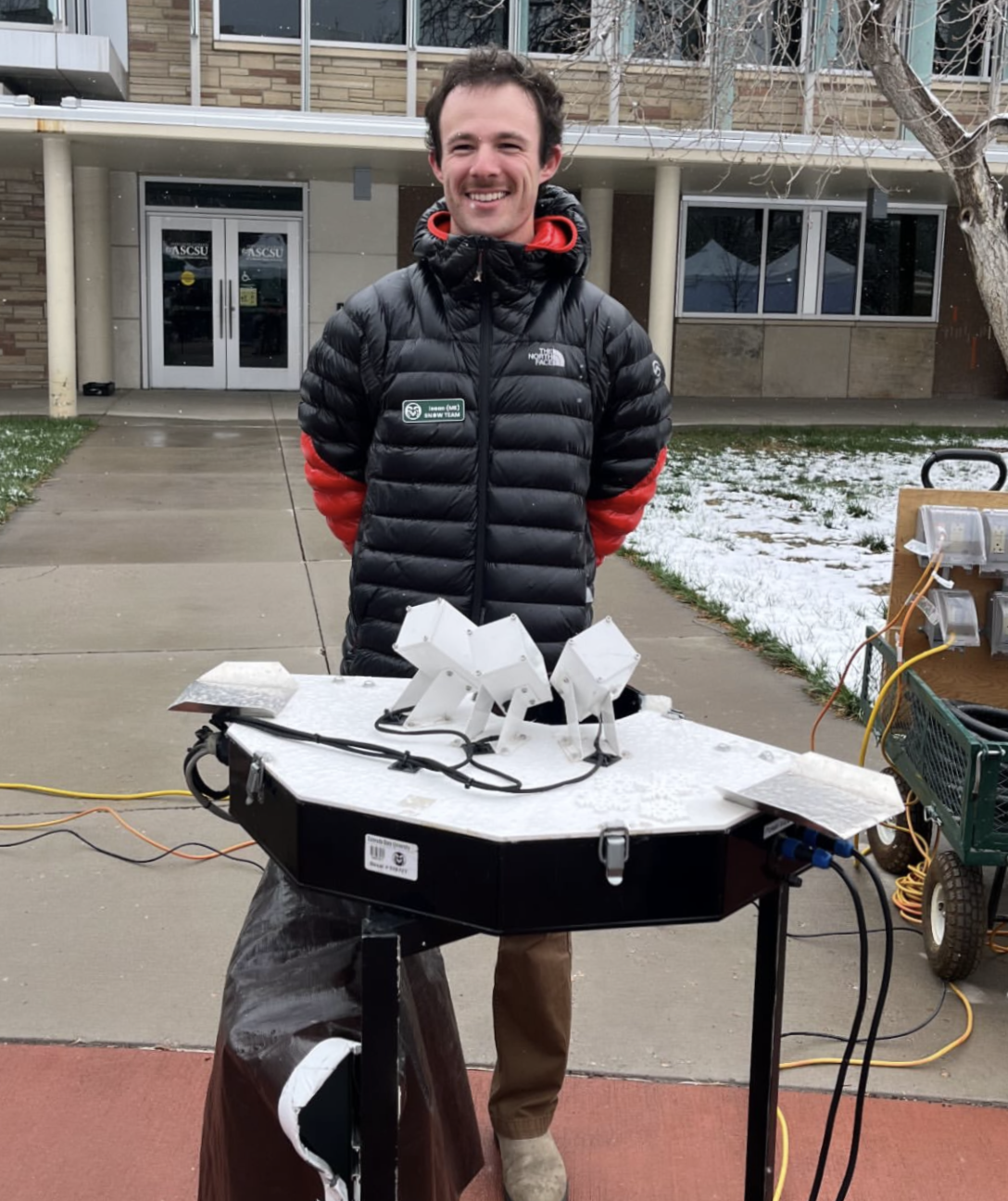
Putting on a demonstration during typical Colorado weather
I took on responsibilities as the manufacturing engineer of the team. Seen with me is one of the two old devices we inherited from previous years.
As the manufacturing engineer, I focused on what materials the new device would be created out of to ensure that it held up to UV light, precipitation, and years of abuse.
With this criteria, I played around with different material/manufacturing methods, namely thermoforming a PVC-style plastic versus 3D printing with PET/PETG/ASA filament.
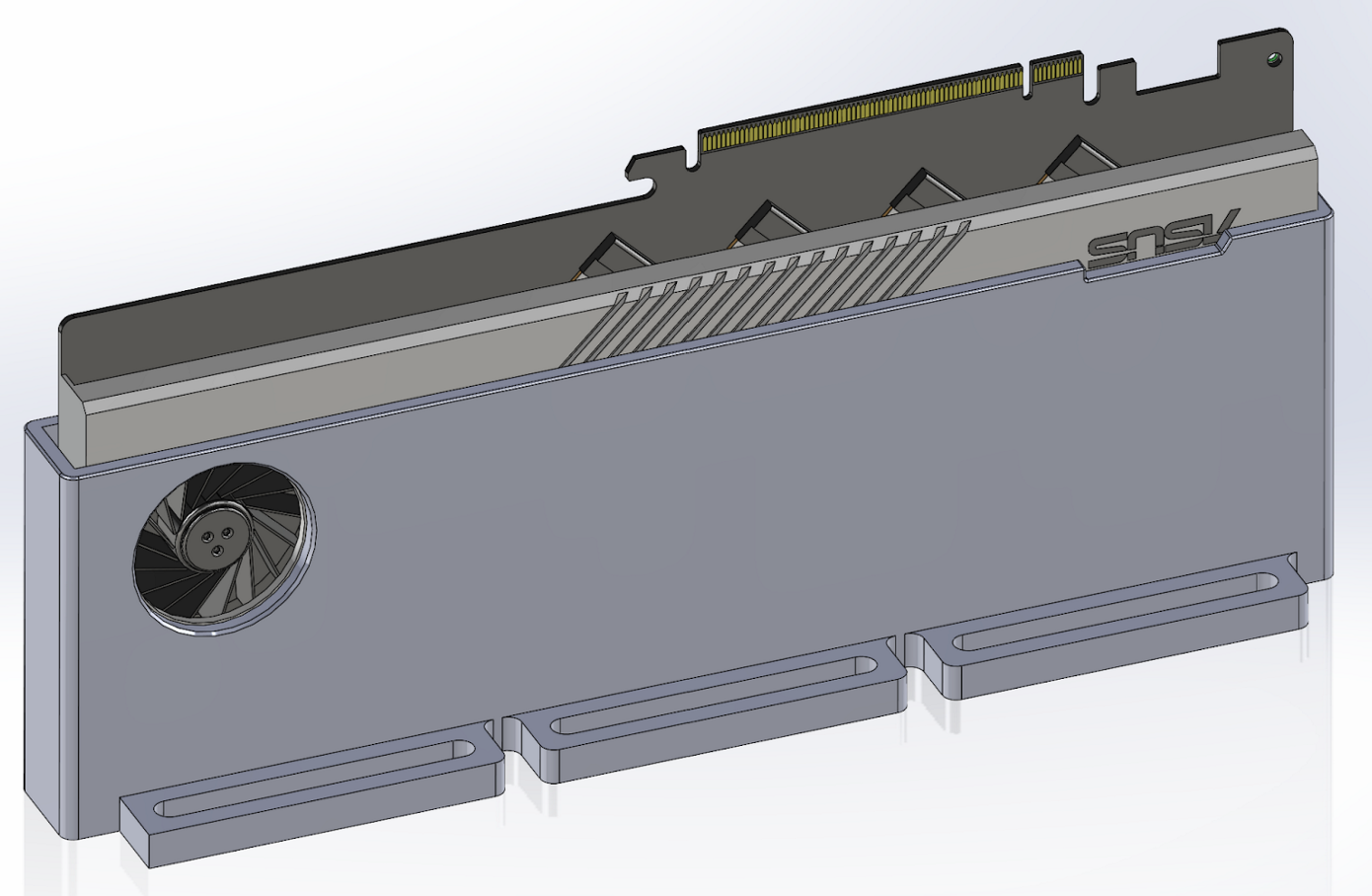
Modular mount for Asus processor
The requirements for the newest device posed significant design challenges. We had two goals, to allow for ease of serviceability for all hardware components, and to reduce the turbulence within the image capturing area, which more often than not would be at odds with each other.
To allow for an easy installation and service for all future engineers on the project, I developed a modular system: an internal frame that we could bolt onto to allow for parts to be continuously upgraded and situated in custom mounts (shown) and attaching wire routing.
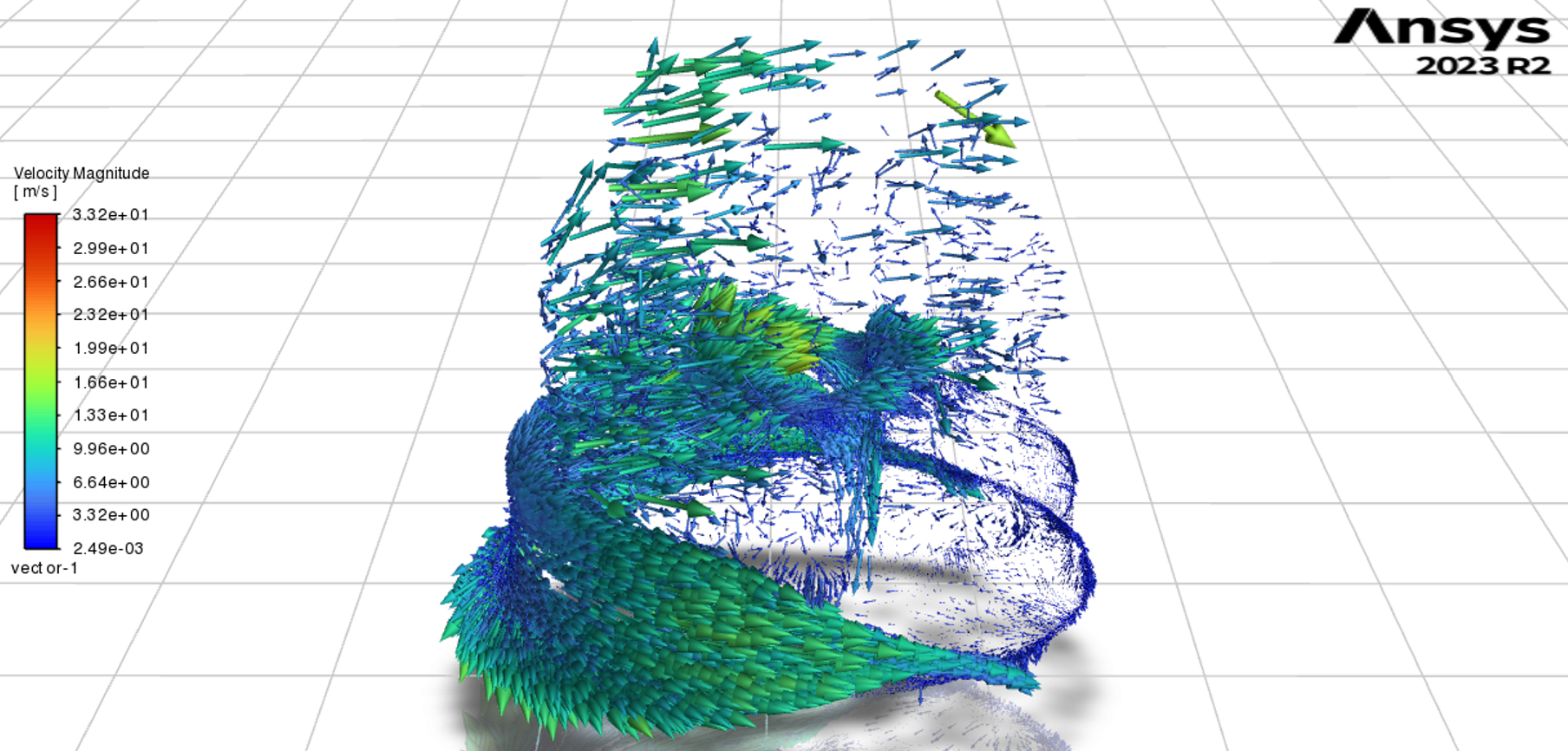
CFD Simulation of final design
CFD simulations of the final design - our focus was on slowing down the air as much as possible before it reached the image capturing area in order to collect the highest quality images possible.
This was achieved by implementing fins on the upper surface to trip the boundary layer of the air, causing the air flow to turn turbulent much sooner. Combined with a stand to raise it off the ground, this was able to create a venturi effect, sucking in more snow.
This was complemented by wind tunnel testing a scale model to verify what we saw in our simulation results.