A launch vehicle optimized for high efficiency travel into lunar and geosynchronous orbits
As a part of my Space Vehicles Trajectory and Performance course, I designed a launch vehicle using engines from a mix of proven rockets to carry out both a Lunar Orbit Insertion (LOI) and a Geosynchronous Transfer Orbit (GTO), simulated using Ansys STK.
Designing the rocket itself proved to be an incredibly interesting process, with plenty of iterating as I tried slightly different combinations of engines and created more accurate weight estimations.
I landed on a two stage design, using SpaceX’s Merlin 1D engine in the first and ArianeGroup’s Ariane engine for the final stage, achieving a liftoff thrust to weight ratio of 1.32, an exceptional mass fraction of 0.92, and a capability of carrying over 4,500 kg to LOI and 7,000 kg to GTO.
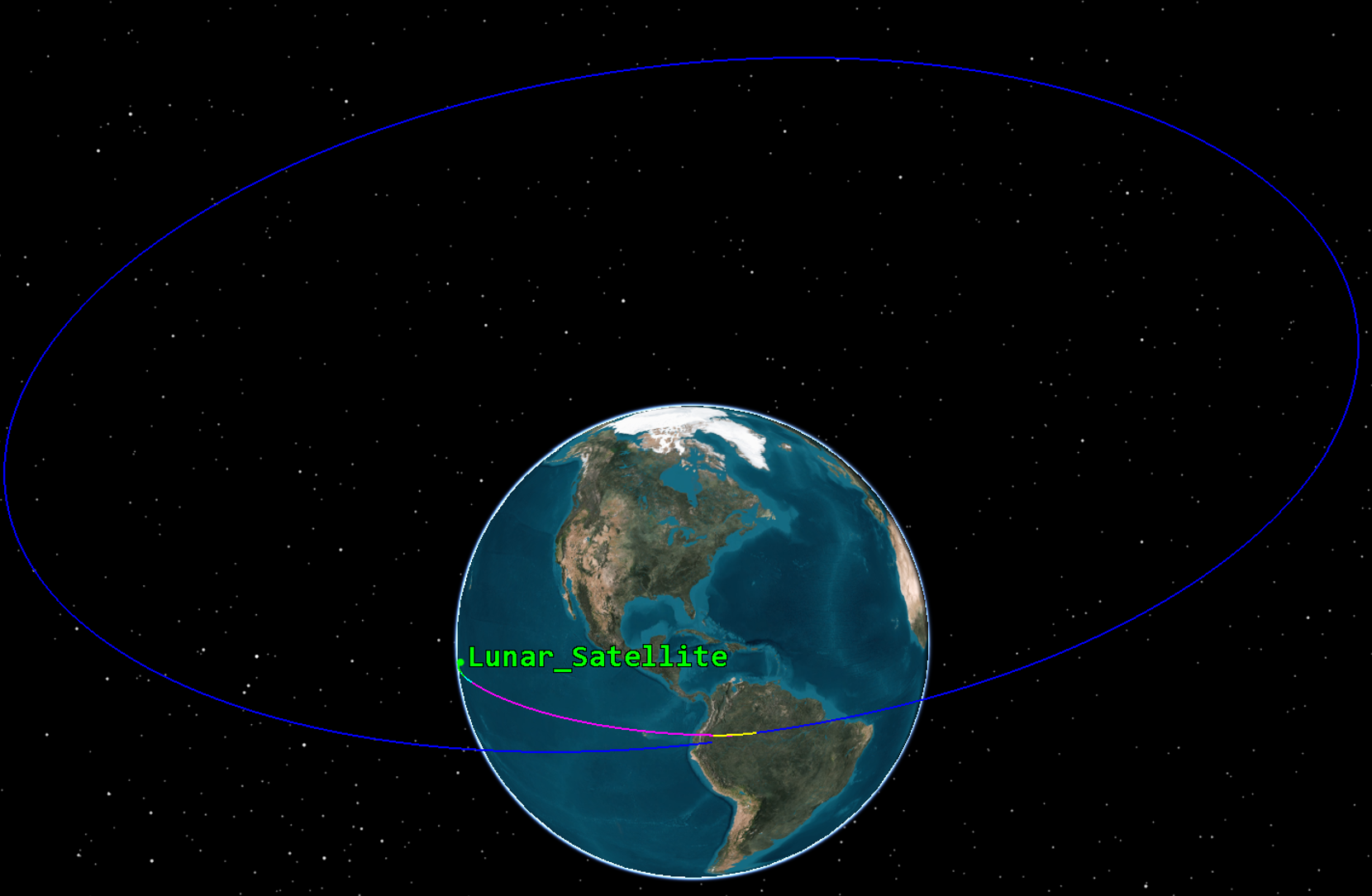
Orbital trace of LOI mission
This mission would be the typical orbital insertion for any mission looking to put an object into the moons orbit, such as a research satellite or a lunar rover.
I focused on the earth-centric part of this mission, so my focus was on getting the rocket to apogee where it would then intersect with the moons orbit 284,000 km away after over 3 days.
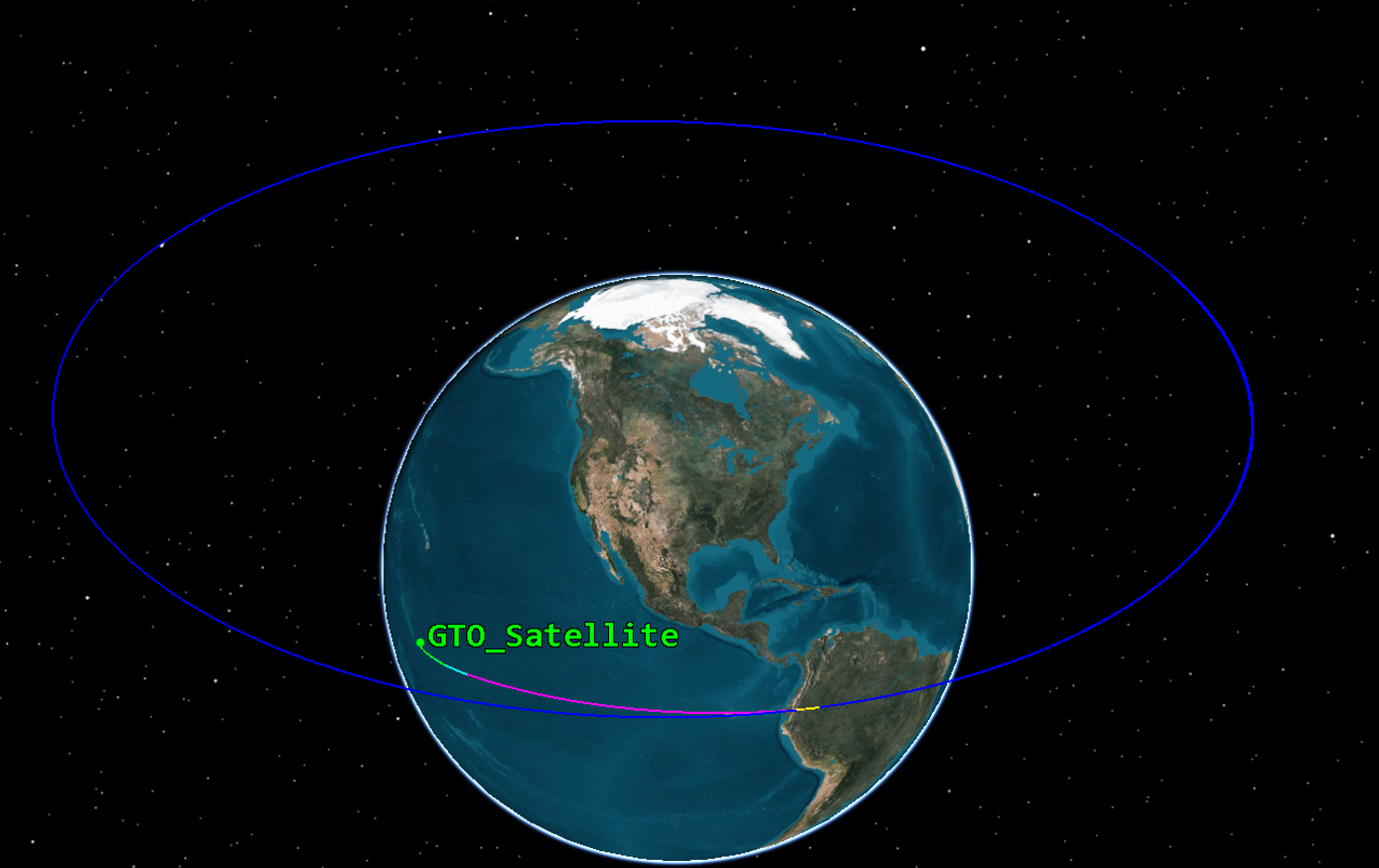
Orbital trace of GTO mission
A Geosynchronous Transfer Orbit would be a typical mission for most communication and earth observation satellites, when viewed from earth they will stay in the same spot in the sky.
Both missions shared the same launch profile, taking off from the now defunct Sea Launch Mobile Platform in order to get the largest boost from earths rotation as possible.
A large aspect of these were to maximize the payload capacity as much as possible, which led me to use the most efficient but slow transfer regimes. You’ll notice that the final burn (in yellow) only occurs once at the initiation of transfer, the mission coasts after that.